What the fort is
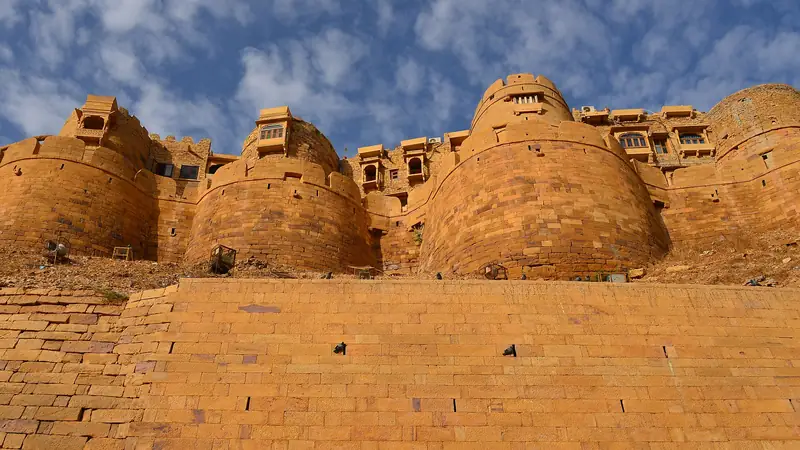
Wikipedia describes Jaisalmer Fort as a yellow sandstone fortress that glows golden at sunset, which is how it got the names Sonar Quila and Golden Fort. It is roughly 460 m long and 230 m wide, stands on a hill rising 76 m above the surrounding countryside, has four fortified gates and 99 bastions, and the inner wall runs about 4 km. Wikipedia calls it the second-oldest fort in Rajasthan.
A living fort
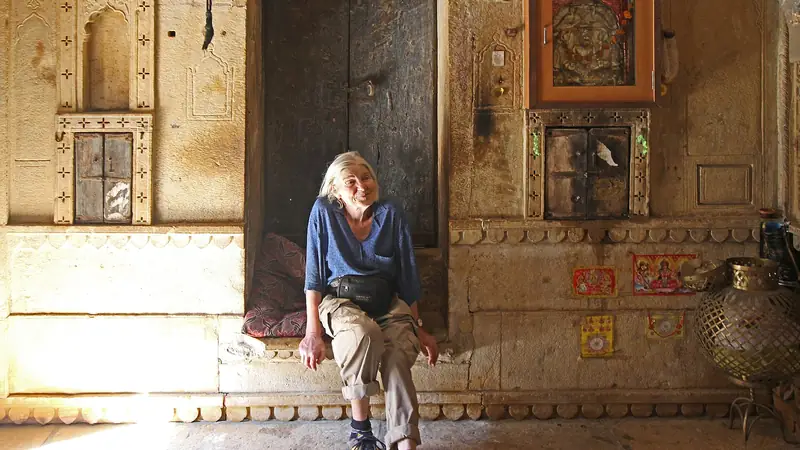
Unlike many monuments, the fort is lived in. Wikipedia says that nearly a quarter of the old city’s population still lives inside and cites about 4,000 residents, most of them descended from communities that served the Bhati rulers. Wikivoyage lists guesthouses and hotels inside, plus eateries and shops. That makes it a place to walk slowly and respect people’s homes: keep to the lanes, do not enter private doorways and ask before photographing residents.
What to see inside
- Royal section: Wikivoyage says it has a short audio tour and that cameras cost 100 rupees extra.
- Lookouts: at least five, according to Wikivoyage.
- Jain temples: Wikipedia counts seven, built in yellow sandstone between the 12th and 16th centuries. Wikivoyage lists an entry of 150 rupees including camera and says the temples are open from 8 AM to noon, with shoes and leather items removed. Treat these as indicative: they may have changed.
- Havelis: Baa Ri Haveli, Nathmal Haveli and Vyas Haveli are described by Wikipedia; see our havelis page.
Conservation: why it matters to visitors
Wikipedia says water seepage is a major threat because the fort is built on weak sedimentary rock, and that parts of the Queen’s Palace and outer walls have collapsed. Responsible visiting means using water sparingly if you stay inside and following signs about restricted areas.
Getting there and combining it with other stops
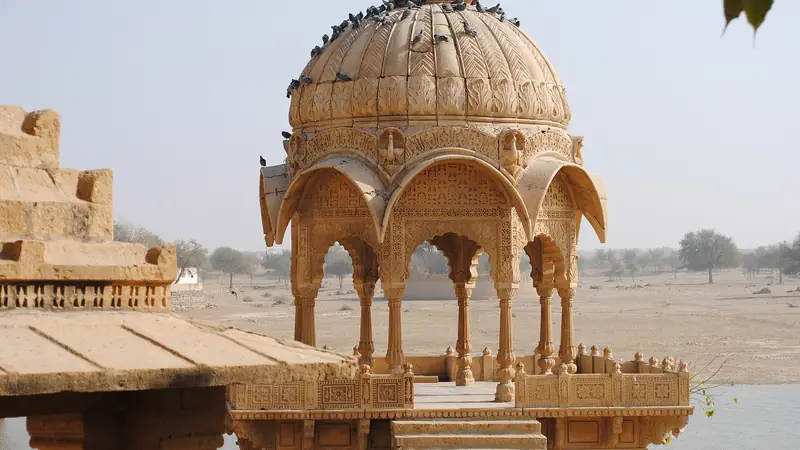
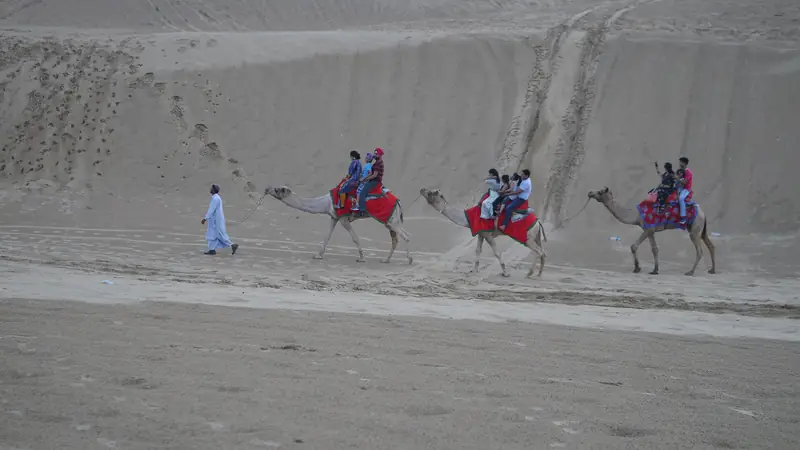
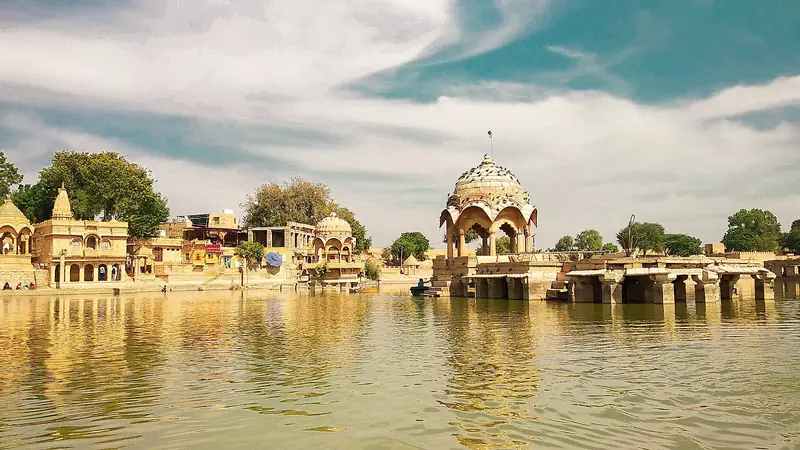
Gadisar Lake is about 1.5 km from the fort (Gadisar Lake). A good order is the fort in the morning, the havelis and the lake after, then the dunes in the evening; see the one-day itinerary and the tours.
Practical notes
- Roughly 500,000 to 600,000 tourists visit each year (Wikipedia), so go early.
- Summer highs are often above 40 °C (Wikivoyage); see best time to visit.
- Where to sleep, inside or outside the walls: where to stay.
Frequently asked questions
Is Jaisalmer Fort a UNESCO World Heritage Site?
Wikipedia says it was declared a World Heritage Site in 2013 as part of the Hill Forts of Rajasthan, a group of six forts. The article is inconsistent about the session number, so we do not give one.
Do people live inside Jaisalmer Fort?
Yes. Wikipedia says nearly a quarter of the old city's population lives inside, about 4,000 residents in its body text, and Wikivoyage lists guesthouses, shops and hotels within the walls.
How much time do I need at Jaisalmer Fort?
We found no sourced figure. Wikivoyage lists at least five lookouts, the royal section with an audio tour, Jain temples and havelis, so allow time to walk; a guided tour sets its own schedule.
Some links are affiliate links: if you book through them we earn a small commission at no extra cost to you. It funds the research behind this site.